The Seamless Tropical Fruit Pattern: A Core Asset for Modern Creative Workflows
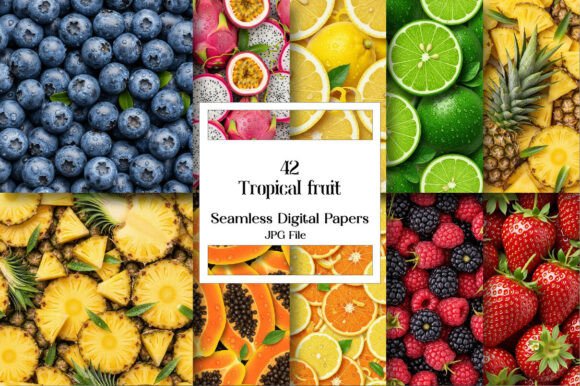
In the dynamic landscape of digital creation and physical product design, a singular asset can serve as the foundation for countless projects. A Seamless Tropical Fruit Pattern is precisely such a resource. This isn't merely a decorative image; it is a high-resolution, repeatable graphic file—provided in JPG format at 300 DPI—designed for seamless integration across a vast spectrum of applications. Its core value lies in its versatility and seamlessness, meaning the pattern tiles perfectly without visible breaks, allowing it to cover any area, from a small notebook to a large wall, with a cohesive, professional look. Understanding where this asset fits into your broader creative or commercial process is the first step toward unlocking its potential.
Integrating the Pattern into Your Project Planning and Execution
The utility of a Seamless Tropical Fruit Pattern begins at the conceptual stage. Whether you are a freelancer scoping a client's branding project, a small business owner developing a new product line, or a hobbyist planning a themed event, this pattern acts as a unifying visual element. Its introduction early in the planning phase ensures design consistency. For instance, when designing a cohesive suite for a bridal or baby shower, you can earmark the pattern for use on invitations, digital backgrounds for the event website, and physical decorations like plates and napkins. This pre-planning eliminates the later scramble for matching assets and establishes a harmonious aesthetic from the outset.
During the execution phase, the pattern interacts seamlessly with other tools and platforms. Its high-resolution nature makes it compatible with professional graphic design software like Adobe Photoshop or Illustrator for creating sublimation graphics for tumblers and t-shirts, as well as with simpler tools like Canva for quick social media backgrounds or presentation slides. The fact that dimensions can be resized without loss of quality is critical here. A marketer might scale it down for a sleek logo variant or a set of playing cards, then scale it up for a large format wall art or poster, all from the same original file. This interoperability streamlines the workflow, reducing the need to source or create multiple variations of a core design.
Practical Implementation Across Key Creative Domains
To move from theory to practice, consider specific workflow examples. For a craft business focused on DIY projects, the pattern becomes a raw material. You might start by printing it on printable fabric for personalized pillows or tote bags. The same file can simultaneously be used to create sublimation wraps for mugs and tumblers, and cut into elements for scrapbook decoupage or mini junk journals. Using one asset across product lines not only saves time but also builds a recognizable brand identity. Organization is key: storing the original watermark-free file in a dedicated "Pattern Assets" folder within your project management system ensures it's readily available for future iterations, like seasonal promotions or new product launches such as candle soap labels.
For digital publishers and bloggers, integration is equally straightforward. The pattern serves as a ready-made background for website graphics, trendy social media posts, or even digital papers for an online planner. Its application in KDP (Kindle Direct Publishing) for book covers or interior page decoration is a direct process—simply incorporate the resized pattern into your cover design template. This consistency in visual content across your blog, social media channels, and published works enhances professional credibility and audience engagement. The workflow here involves preparing the asset in the required dimensions for each platform, a task made efficient by the file's scalable properties.
Ensuring Quality and Long-Term Utility in Your Workflow
Quality control is inherent when using a well-made seamless pattern. The 300 DPI resolution guarantees that outputs remain crisp, whether for fine digital illustration or physical printing on items like phone cases or handmade stationery. This eliminates a common workflow bottleneck: the discovery of pixelated or low-quality graphics at the final output stage. Furthermore, the asset's applicability to both digital (social media graphics, digital presentations) and physical (party decorations, paper crafts) ends means it can serve as a long-term staple in your resource library. A small business owner might use it for initial product labels and, years later, for a refreshed website background, maintaining brand continuity without additional design cost.
Usability and preparation are straightforward. Since it's an instant digital download, the asset acquisition step is instantaneous, fitting into even tight project timelines. Before starting a project, a simple review of its potential uses—from packaging and bags to posters and gift items—can help you map out its application across all project deliverables. This preparatory thinking maximizes efficiency, allowing you to batch-process tasks. For example, you could create all printable items (notebook covers, posters, bookmarks) in one design session, and all sublimation items (t-shirts, mugs) in another, using the same core pattern file.
Observing the Pattern’s Role in Collaborative and Commercial Processes
The Seamless Tropical Fruit Pattern also facilitates collaborative workflows. In a team setting, such as a marketing agency or a wedding planning business, providing this single asset to different team members ensures consistency. The web designer uses it for site backgrounds, the print specialist for invitations and napkins, and the social media manager for campaign graphics. This eliminates miscommunication about visual style and streamlines the collaborative execution. For entrepreneurs, the pattern's breadth of use directly impacts commercial outcomes. A single purchase can yield graphics for product labeling, promotional materials, and the product itself (like a sublimated tote bag), effectively reducing overhead and increasing the speed of product development and market testing.
Ultimately, the integration of this asset into your routine is about recognizing its function as a process multiplier. It is not a one-off decorative piece but a foundational tool that supports consistency, efficiency, and quality across numerous creative and commercial actions. By placing it strategically within your planning, leveraging its compatibility with other tools, and organizing its use for long-term projects, you transform a simple pattern into a powerful driver for streamlined workflow execution and professional results.