Understanding White Glitter Textures for Creative Design Projects
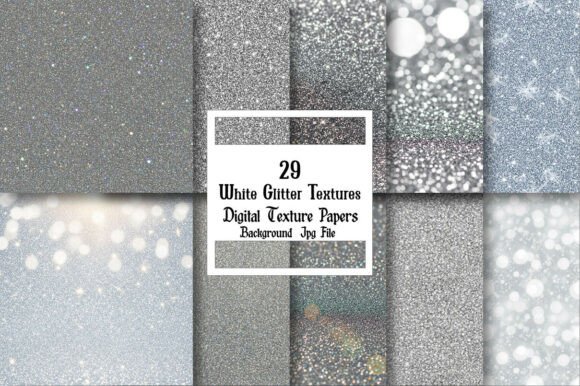
In the vast landscape of digital design assets, specific textures carve out niches that serve unique creative needs. White Glitter Textures represent a distinct category of digital files aimed at adding sparkle, dimension, and a touch of elegance to a wide array of projects. Fundamentally, these are high-resolution image files, often in JPG format at 300 DPI, featuring patterns and surfaces dominated by white glitter effects. Their defining characteristic is the visual simulation of reflective glitter particles against a primarily white or light background, offering a clean yet festive aesthetic that differs markedly from colored or multi-tonal glitter textures.
What sets this collection apart is its specific focus and the noted variance in file properties. As the description clarifies, some files within White Glitter Textures are seamless, meaning they can be tiled or repeated without visible edges to create continuous patterns, while others are not. This is a critical technical distinction for designers comparing options. A seamless texture is ideal for covering larger areas like backgrounds for websites, printable fabric, or tumblers wraps, where a repeating pattern must appear fluid. Non-seamless files might be better suited for discrete applications like focal points on candle labels, playing cards, or notebook covers, where a single, contained image is required.
Core Applications and Practical Use Cases
The listed applications for White Glitter Textures are extensive, highlighting their versatility. They are promoted for cute tote bags, notebook covers, sublimation graphics for tumblers and mugs, scrapbook decoupage, and even party napkins and plates. This breadth suggests the textures are designed to be adaptable across both physical crafts and digital media. For an individual evaluating this resource, understanding which use cases align with their project is key.
For sublimation processes, which transfer designs onto polymers like mugs or t-shirts, a high-resolution 300 DPI file is essential to prevent pixelation, and the white-dominated palette can be advantageous on light-colored or transparent substrates. In paper crafts like mini junk journals or scrapbooking, the glitter effect adds tactile visual interest without the mess of physical glitter. When considering alternatives, one might compare White Glitter Textures with physical glitter adhesives or other digital texture packs that offer matte, metallic, or colored glitter effects. The digital format offers resizability and reusability, while physical products provide actual texture but lack flexibility.
Comparing Formats and Resolution Considerations
A significant factor in evaluating White Glitter Textures is the technical specification. The delivery in JPG format at high resolution is standard for many digital asset packs, but designers comparing options should note that JPG is a compressed format. For projects requiring absolute fidelity or further professional graphic manipulation, some creators might prefer assets in lossless formats like PNG or TIFF, especially if transparency layers are needed. However, for the majority of listed uses—sublimation, printing, digital papers—JPG at 300 DPI is perfectly adequate. The ability to resize dimensions is a standard and helpful feature, allowing the same file to serve a phone case design and a large wall art print.
The emphasis on "high resolution" directly addresses a common concern when sourcing graphics: quality loss upon scaling. This specification positions White Glitter Textures favorably against free or lower-quality stock images that might appear blurry when printed. A tradeoff exists, however, in file size; high-resolution JPGs can be large, which might be a consideration for users with limited storage or who need to upload many files to online design tools.
Identifying the Right Fit for Your Project
Determining when White Glitter Textures are the optimal choice involves assessing your project's aesthetic requirements, technical needs, and the desired outcome. The clean, white-based sparkle is particularly well-suited for projects aiming for a sophisticated, bridal, baby shower, or winter-themed look. It can elevate wedding invitations, birthday party decorations, or planner accents with a chic shimmer that is less overwhelming than full-color glitter.
Conversely, there are situations where this specific pack may not be the best fit. If your project demands vibrant, colored glitter—for a carnival-themed event or a bold punk-rock scrapbook page—you would need to seek an alternative texture pack with different color palettes. Similarly, if you require a texture with a transparent background for intricate layering in digital presentations or website graphics, the JPG format of these files, typically with a white or solid background, might necessitate additional editing work compared to a PNG alternative.
Realistic examples help clarify this. A designer creating sublimation wraps for white ceramic tumblers might find White Glitter Textures perfect, as the design integrates seamlessly with the base color. However, someone designing labels for dark-colored candle jars might need a texture with a darker base or one that is easily isolated, requiring more post-processing. For handmade stationery, the white glitter can be beautifully printed on light cardstock, but on dark paper, the effect would be lost unless the texture file itself has isolatable glitter elements.
Strengths and Potential Limitations
The primary strengths of White Glitter Textures lie in their specialization and quality. A curated collection focused on a single aesthetic effect allows for depth within that style, potentially offering more variation in glitter scale, pattern, and density than a general "glitter" pack would. The high resolution ensures professional output for printed goods, a crucial factor for those selling physical products like KDP book covers or personalized pillows. The instant digital download model provides immediate access, which is advantageous for last-minute projects or rapid prototyping.
Potential limitations revolve around the specificity mentioned earlier. The "white" focus is a strength for some projects but a constraint for others. The note that not all files are seamless requires users to inspect the individual files or, if not provided beforehand, be prepared to adapt their use. Users comparing resources might also consider whether a pack includes complementary design elements like matching borders, icons, or fonts, which this offering does not explicitly mention. It is purely a texture resource, meaning additional design work to integrate it into a complete graphic is necessary.
Evaluating Against Broader Creative Resources
When exploring alternatives and making an informed decision, it's helpful to view White Glitter Textures within the broader ecosystem of design assets. They occupy a midpoint between generic free textures and highly specialized, often more expensive, design packs from niche marketplaces. For a hobbyist creating party decorations or a small business owner producing personalized gifts, this type of pack can offer excellent value, providing a cohesive set of textures for multiple projects without the cost of commissioning custom designs.
A key decision factor is project volume. If you plan to use glitter textures repeatedly across many products—for example, a stationery brand using them on notebooks, bookmarks, and cards—investing in a dedicated, high-quality pack like this is sensible. If your need is for a one-off project, you might weigh the cost against the time it would take to create a similar effect using graphic software tools like Photoshop’s filter libraries, which may offer glitter brushes or patterns but often require more skill to achieve a natural, high-resolution result suitable for printing.
Ultimately, White Glitter Textures serve a clear purpose. They are a practical solution for creators who value a specific visual effect and require reliable, ready-to-use files. Their applicability from digital social media graphics to physical crafts like 3D projects and wall art underscores their utility. By understanding your need for seamless versus non-seamless files, your color palette requirements, and your output medium (print versus digital screen), you can determine if this resource aligns with your goals or if you should continue researching other texture styles or formats to find the perfect match for your creative vision.