Groovy 70s Flower Digital Pattern for Modern Creativity
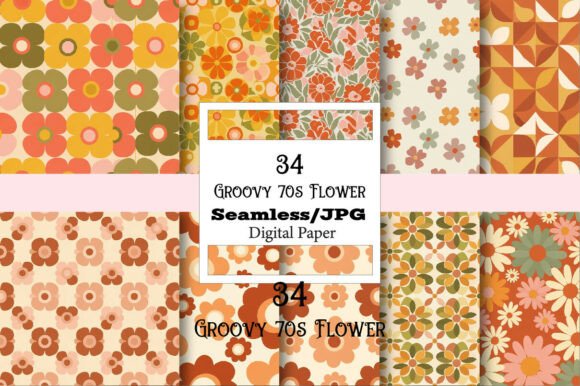
The vibrant, nostalgic appeal of a Groovy 70s Flower Digital Pattern isn't just a burst of retro color; it's a versatile creative toolkit. This high-resolution seamless pattern captures the era's bold optimism—with its swirling petals, psychedelic hues, and organic shapes—but translates it into a digital asset ready for today's projects. Its seamless nature means it can tile infinitely without a break, making it ideal for covering large areas, from fabric to website backgrounds. What makes it particularly useful is its adaptability: as a JPG file at 300 DPI, it maintains crisp quality whether you're printing it on a physical product or using it in a digital space.
Unlocking a Universe of Project Ideas
This single pattern file is a springboard for countless applications. Think of it as your foundational graphic, which you can resize, crop, and recolor to suit your specific vision. The immediate uses like cute tote bags, notebook covers, and personalized pillows are clear starting points. But the potential extends into nearly any medium where a touch of joyful, vintage-inspired design is desired.
For Physical Products and Handmade Crafts
Crafters and small business owners can leverage the pattern for sublimation, allowing the design to be permanently infused into tumbler wraps, mugs, and t-shirts. Its high resolution ensures the intricate floral details remain sharp. For paper-based projects, such as mini junk journals, scrapbook decoupage, or handmade stationery, the pattern serves as beautiful digital paper. You can print it to create unique party napkins and plates, candle and soap product labels, or even custom playing cards. The key here is to consider your substrate—adjusting the pattern's scale for a large tote bag versus a small sticker ensures the design feels intentional and not overcrowded.
For Digital and Graphic Design
Marketers, bloggers, and freelancers can use this Groovy 70s Flower Digital Pattern to inject personality into digital spaces. It works excellently as a trendy social media background, a vibrant element in website graphics, or an engaging backdrop for digital presentations. When using it for web or screen purposes, you might resize it to lower DPI for faster loading, but the 300 DPI source guarantees you never start with a pixelated image. For a cohesive brand look, you could sample colors from the pattern for your palette or use isolated floral elements as recurring motifs in your logo or website backgrounds.
Adapting the Pattern for Different Audiences and Goals
The pattern's inherent charm is broad, but its application can be finely targeted. An educator creating classroom materials might use it for book covers or posters to create a warm, stimulating environment. A planner designing a bridal or baby shower event could incorporate it into invitations and decorations for a cohesive, themed aesthetic. Entrepreneurs selling handmade goods might apply it to packaging and product labels to establish a recognizable, artisanal brand identity. Each user should ask: what emotion or association does this groovy floral pattern evoke for my specific audience? For a nostalgic birthday party, it's fun and celebratory; for a chic journal cover, it's artistic and unique.
Practical Recommendations for Effective Use
To keep your results clear and professional, start by planning the pattern's role in your composition. Is it a dominant background or a subtle accent? For backgrounds on items like tumblers or website headers, ensure text or key foreground elements have enough contrast against the pattern by perhaps placing them on a solid color block drawn from the pattern's palette. When printing, always do a test at your intended size to check color vibrancy and detail retention. Remember, the file comes without a watermark, giving you complete freedom to edit. You can digitally alter contrast, combine it with other minimalist graphics for balance, or mirror sections to create new symmetrical layouts for things like wind spinners or bookmarks.
Balancing Inspiration with Original Outcomes
While the pattern itself is a provided asset, your creativity dictates the final product. Avoid simply slapping the pattern onto every surface. Instead, interpret it. For a KDP book cover, you might fade it to a watermark behind the title. For a graphic design poster, you could vector-trace a single flower to create a bold icon. The seamless quality means you can create continuous wraps for cylindrical objects like mugs, calculating the repeat to align perfectly. This encourages a designer's mindset: use the Groovy 70s Flower Digital Pattern as raw material, not a finished solution. This approach leads to original work that still carries the identifiable, cheerful spirit of the design.
Sustaining Consistency Across Projects
If you're using this pattern for a multi-part project—like a wedding suite including invitations, napkins, and a website banner—maintain consistency by using the same crop or tile segment across all items. Resize proportionally. This creates a unified visual theme that feels expertly curated. For ongoing use, such as a blogger using it as a recurring graphic series, establish a few set ways you employ it (e.g., as a full-background, as a border strip, as a faded overlay) to build a recognizable style without monotony. The pattern's versatility is its strength, but disciplined application makes that strength effective for your audience.
Ultimately, this digital pattern is more than a file; it's a conduit for personalized creation. From the tactile pleasure of a printed fabric tote to the digital engagement of a social media graphic, it bridges the gap between retro inspiration and modern utility. By focusing on your specific goal—whether it's crafting, branding, or decorating—you can transform this seamless groovy floral into something uniquely yours, suitable for gifts, business, or personal joy. The only limit is the breadth of your own project list, and that list, as you've seen, can be wonderfully long.